
Your 90-Day Reset Plan for 2026: Streamline Your Independent Healthcare Practice

The start of a new year is more than a date change — it’s an opportunity to reset how your practice operates.

If 2025 felt busy, reactive, or administratively heavy, you’re not alone. Many independent healthcare providers enter a new year still carrying inefficient workflows, manual processes, and tools that no longer support growth.

This 90-day reset plan is designed to help you streamline your healthcare practice in 2026 — step by step. Instead of trying to change everything at once, this plan focuses on clarity, simplification, and measurable improvements across scheduling, billing, documentation, and patient experience.

CompanyOn

Why a 90-Day Reset Works

Big transformations fail when they’re overwhelming. A 90-day framework allows you to:

  • Focus on one operational area at a time

  • Measure progress without burnout

  • Build habits that last beyond January

  • Create momentum early in the year

This approach aligns perfectly with independent practices where time, staff, and resources are limited.


Days 1–30: Audit, Clean Up, and Clarify

1. Identify Where Time Is Being Lost

Start with a simple audit:

  • Where are you doing things manually?

  • Which tasks feel repetitive or frustrating?

  • Where do errors or delays usually happen?

Common problem areas include scheduling, intake forms, billing follow-ups, and documentation overload. If this sounds familiar, review Why Documentation Overload Is Holding You Back to spot hidden inefficiencies.


2. Review Your Scheduling Workflow

Ask yourself:

  • Can patients book online without calling?

  • Are cancellations and no-shows frequent?

  • Is your calendar clear and easy to manage?

If scheduling still depends heavily on back-and-forth communication, it’s time to simplify. Articles like Making Scheduling Instant and Easy and Strategies to Improve Appointment Scheduling Efficiency offer practical insights for quick wins.


3. Clean Up Digital Tools

Too many disconnected tools create friction. During your first 30 days:

  • Eliminate platforms you no longer use

  • Identify overlapping tools

  • Centralize essential workflows where possible

A streamlined tech stack is the foundation for sustainable growth in 2026.


Days 31–60: Automate and Standardize

4. Simplify Patient Intake and Documentation

Your intake process sets the tone for the entire patient experience. Long forms, paper documents, or repeated data entry slow everything down.

Use this phase to:

  • Move to digital intake forms

  • Standardize documentation templates

  • Reduce duplicate data entry

Start by reviewing How to Streamline the Patient Intake Process and Best Practices for Managing Patient Consent Forms Digitally.


5. Automate Appointment Reminders

No-shows drain time and revenue. Automation is one of the fastest ways to improve efficiency without adding work.

Set up:

  • Automated reminders (email or SMS)

  • Easy confirmation or rescheduling links

  • Clear, friendly messaging

Learn how to do this effectively in Adopting Appointment Reminders to Increase Revenue and Decrease No-Shows and Automate Appointment Reminders Without Sounding Robotic.


6. Standardize Billing and Payments

Billing inconsistencies create stress and slow cash flow. During this phase:

  • Review your invoicing workflow

  • Identify delays in payments

  • Standardize billing steps

Resources like Billing Made Easy: Innovative Solutions for Healthcare Practices and 5 Proven Billing Tactics to Get Paid Faster can guide this transition.


Days 61–90: Optimize, Measure, and Scale

7. Track the Right Metrics

You can’t improve what you don’t measure. In your final 30 days, focus on tracking:

  • Appointment utilization

  • No-show rates

  • Intake completion time

  • Billing cycle length

For guidance, revisit Key Metrics to Track Digital Efficiency in Small Practices.


8. Improve Patient Experience Through Digital Touchpoints

Small digital improvements have a big impact:

  • Faster booking

  • Clear communication

  • Easy access to forms and payments

These micro-improvements are explored in Digital Micro-Moments: The Secret to Patient Loyalty in 2026 and Patient Experience as a Competitive Advantage.


9. Consolidate Everything into One System

By the end of 90 days, your goal should be clarity:

  • One calendar

  • One patient record

  • One billing workflow

  • One source of truth for your practice

This is where an all-in-one platform like CompanyOn’s patient management software helps you maintain efficiency without adding complexity.


Conclusion

Streamlining your practice doesn’t require a complete overhaul — it requires a plan.

By following this 90-day reset plan, you can streamline your healthcare practice in 2026, reduce administrative stress, improve patient experience, and start the year with confidence and control.

The key isn’t doing more.
It’s doing what matters — better.

🚀 Ready to simplify scheduling, billing, and documentation in one place? Explore how CompanyOn supports independent healthcare providers at companyonapp.com.

Ready to make the switch?

Try Our Platform Free for 14 days.

See CompanyOn in Action

Schedule A Free 1:1 Personalized Demo

How to Improve Your Online Reputation Without Spending on Ads

In today’s digital age, patients search, compare and decide long before they walk through your clinic door. For healthcare professionals, a strong online reputation isn’t just a “nice to have”—it’s a competitive advantage that builds trust, generates new referrals, and strengthens patient loyalty.

But here’s the good news: you don’t need a big advertising budget to improve your reputation online. With thoughtful strategies, consistent effort, and patient‑centered engagement, you can elevate your visibility and credibility organically.

In this article, we’ll explore actionable ways to grow your online reputation for healthcare professionals without spending a dime on ads.

CompanyOn

1. Generate and Encourage Authentic Patient Reviews

Patient reviews are one of the most powerful signals of trust for new patients.

Why this matters:
Most people check online reviews before booking a healthcare provider. Positive reviews not only influence decisions but also boost search visibility.

How to do it right:

  • Ask for reviews after a visit when the experience is still fresh.

  • Send a follow‑up text or email with a direct link to your review page.

  • Keep requests clear, respectful, and compliant with privacy guidelines.

Once you have positive patient testimonials, use them to reinforce trust. Learn how to turn feedback into growth in Turning Patient Feedback Into a Competitive Advantage for Your Practice.


2. Optimize Your Online Profiles and Directories

Claiming and optimizing your listings helps patients find you more easily — and shows that you’re an active, engaged clinician.

Where to start:

  • Google Business Profile — key for local searches.

  • Health‑specific directories (e.g., Healthgrades, RateMDs).

  • Social media business pages with updated info and visuals.

Include complete information, professional photos, services offered, and links to your website or booking page. For more on getting noticed online, see Boost Your Clinic’s Online Presence: Effective Digital Marketing Strategies.


3. Create and Share Valuable Educational Content

Publishing informative content positions you as a trusted voice in your niche — and helps your clinic show up in search results.

Content ideas that work:

  • Blog posts answering common patient questions

  • Educational videos explaining treatments

  • Infographics simplifying healthcare topics

Patients are more likely to trust and share content that educates them. If you need ideas on engaging patients through digital experiences, check out How to Create a Digital Experience That Engages Your Patients.


4. Use Patient Stories and Social Proof

Real experiences carry weight. They add authenticity to your digital presence — more than generic marketing copy ever could.

How to leverage patient stories:

  • Feature brief testimonial quotes on your homepage

  • Design social media posts with real patient success stories

  • Request permission to share detailed patient narratives

This kind of social proof reinforces credibility and helps new patients feel confident choosing your practice.


5. Be Responsive to Online Mentions and Feedback

Your response — both online and offline — contributes to your reputation.

Online responsiveness

  • Thank patients for positive reviews

  • Respond to negative reviews with empathy and solutions

  • Offer to continue detailed discussions privately (email or phone)

Offline responsiveness

Great service in person fuels great digital reputation. Prompt follow‑ups, clear communication, and respectful engagement lead to satisfied patients who are more likely to leave positive feedback online.

If you want to automate reminders and improve patient communication, explore How to Improve Patient Retention with Automated Appointment Reminders.


6. Participate in Your Community (Online & Local)

Being an active member of your community — both digitally and physically — builds reputation without ad spending.

Ways to get involved:

  • Share health tips in local community groups

  • Host free webinars or educational events

  • Partner with other local professionals for joint content

These engagements increase mentions of your practice across online spaces — naturally improving your online footprint.


7. Monitor Your Digital Presence Regularly

You don’t need expensive software to stay on top of your online reputation.

Simple tools you can use:

  • Google Alerts to monitor mentions of your name or clinic

  • Track review updates on key directories

  • Check engagement metrics on your social profiles

Regular monitoring allows you to catch conversations early and respond thoughtfully.


8. Showcase Expertise Through Collaborations and Thought Leadership

Expanding your digital presence by contributing externally helps solidify your professional authority.

Examples of collaborations:

  • Guest blog posts on niche health websites

  • Live Q&A sessions on social media

  • Interviews or features in health-related podcasts or newsletters

These appearances build broader visibility and drive new traffic back to your own channels.


Conclusion

Improving your online reputation for healthcare professionals doesn’t require paid advertising — it requires strategy, consistency, and authentic engagement.

By focusing on patient reviews, educational content, responsiveness, community involvement, and online visibility, you strengthen trust and grow your practice organically.

And for tools that help you do this while centralizing patient communication, appointments, and digital experiences, check out CompanyOn’s patient management software — a solution designed for solo practitioners and small clinics who want to build visibility without paid ads.

Ready to make the switch?

Try Our Platform Free for 14 days.

See CompanyOn in Action

Schedule A Free 1:1 Personalized Demo

Make Better Decisions with Your Own Data: How to Use Analytics in Your Practice

Every day, your clinic generates valuable data—from appointment trends and billing cycles to patient engagement and treatment outcomes. But data itself isn’t power. Healthcare data analytics for clinics becomes powerful only when you turn it into insights that improve decision‑making.

In a world where efficiency, quality of care, and patient experience are competitive differentiators, leveraging your data is no longer optional. With the right approach, analytics can help you streamline operations, make informed strategic choices, and even predict future needs before they become issues.

In this article, we’ll explore how small practices can use analytics to make smarter decisions and grow with confidence.

CompanyOn

What Is Healthcare Data Analytics for Clinics?

Healthcare data analytics refers to the systematic analysis of information collected throughout your practice—appointments, finances, patient behavior, clinical documentation, communication patterns, and more—to identify patterns and make informed decisions.

This can include:

  • Operational data (e.g., scheduling efficiency)

  • Financial data (e.g., billing cycle times)

  • Patient engagement indicators (e.g., response to reminders)

  • Clinical outcomes data

  • Digital touchpoint metrics

When interpreted correctly, these insights help you manage your practice proactively instead of reactively.


Why Analytics Matters for Small Practices

1. Improve Operational Efficiency

Knowing which parts of your workflow cause delays is the first step to fixing them. For example:

  • High no‑show rates may indicate a need for better reminders.

  • Long intake times might point to inefficient onboarding.

If you want to explore real ways to optimize your patient intake workflow, check out our article on how to streamline the patient intake process.


2. Enhance Patient Engagement and Retention

Data helps you understand how patients interact with your clinic:

  • Are they responding to reminders?

  • Do they prefer telehealth or in‑person visits?

  • Which digital channels drive the most engagement?

When you know this, you can tailor your communications and improve experiences—leading to better loyalty.

Dive deeper into engagement strategies in Digital Micro‑Moments: The Secret to Patient Loyalty in 2026.


3. Financial Health Insights

Data analytics reveals patterns in your revenue cycle:

  • Are claims being processed slowly?

  • Where are the bottlenecks in billing?

  • Which services are most profitable?

By tracking trends over time, you can forecast revenue more accurately and allocate resources where they matter most. For practical tips to strengthen your billing performance, read 5 Proven Billing Tactics to Get Paid Faster.


4. Better Scheduling and Resource Allocation

Analytics helps you predict demand and schedule accordingly. For example:

  • Seasonal fluctuations

  • Peak hours

  • Provider availability

With insight into historical patterns, your clinic can better match staffing and appointment availability with actual patient needs—improving satisfaction and reducing wait times.

For ways to reduce scheduling friction, explore Making Scheduling Instant and Easy.


How to Start Using Data Analytics in Your Clinic

If the idea of analytics sounds complicated, don’t worry—starting small is key. Here’s how to begin:

1. Identify Your Key Metrics

Choose a few core areas that matter most to your practice. Some examples include:

  • Appointment utilization rate

  • No‑show and cancellation rates

  • Intake completion times

  • Patient engagement levels

  • Billing cycle length

These clinical efficiency metrics give you a measurable baseline to improve from.


2. Collect Data Consistently

You can’t analyze what you don’t collect. Choose tools that automatically gather data from:

  • Appointment systems

  • Patient portals

  • Billing and invoicing

  • Communication tools

Modern practice management software helps centralize this data and makes analytics accessible without complex spreadsheets.


3. Visualize Trends Over Time

Raw numbers are hard to interpret. Use dashboards or simple visual tools to observe trends, seasonal patterns, or sudden changes. Visualization helps you answer questions like:

  • Are no‑shows rising or falling?

  • Is patient engagement improving?

  • Are revenue cycles getting shorter?

With consistent monitoring, you’ll spot opportunities before they become problems.


4. Turn Insights Into Action

Insights only matter if you act on them. For example:

  • If intake times are slow, digitize forms or pre‑visit procedures.

  • If reminders are ineffective, test different messaging or channels.

  • If billing cycles are long, investigate claim rejections and streamline invoicing.

To learn practical strategies for enhancing engagement and operations through digital tools, check How to Better Engage Your Clients by Leveraging Technology.


5. Review and Refine Regularly

Analytics isn’t a one‑time task. Schedule regular reviews (weekly, monthly, or quarterly) to track progress, celebrate wins, and adjust strategies. Over time, your data becomes a compass guiding strategic decisions rather than a rear‑view mirror of past issues.


The Role of Technology in Analytics

The right systems make analytics intuitive and powerful. A unified platform can:

  • Automatically gather and centralize data

  • Generate visual dashboards

  • Trigger alerts when key metrics trend negatively

  • Integrate patient engagement, scheduling, billing, and clinical data

With data integrated across workflows, you can focus more on care and less on manual reporting.

Explore how CompanyOn’s patient management software supports clinics in gaining clarity with data while improving patient experiences.


Conclusion

Using healthcare data analytics for clinics isn’t just about numbers—it’s about making better decisions that improve care delivery, streamline operations, and grow your practice sustainably.

Analytics empowers you to:

✔ Identify weak points before they become costly problems
✔ Customize patient communication and services
✔ Forecast trends and plan growth
✔ Measure the impact of changes over time

Start small, focus on what matters most, and let your data work for you.

Ready to unlock the power of your clinic’s data? Explore solutions that make analytics simple and actionable at companyonapp.com.

Ready to make the switch?

Try Our Platform Free for 14 days.

See CompanyOn in Action

Schedule A Free 1:1 Personalized Demo
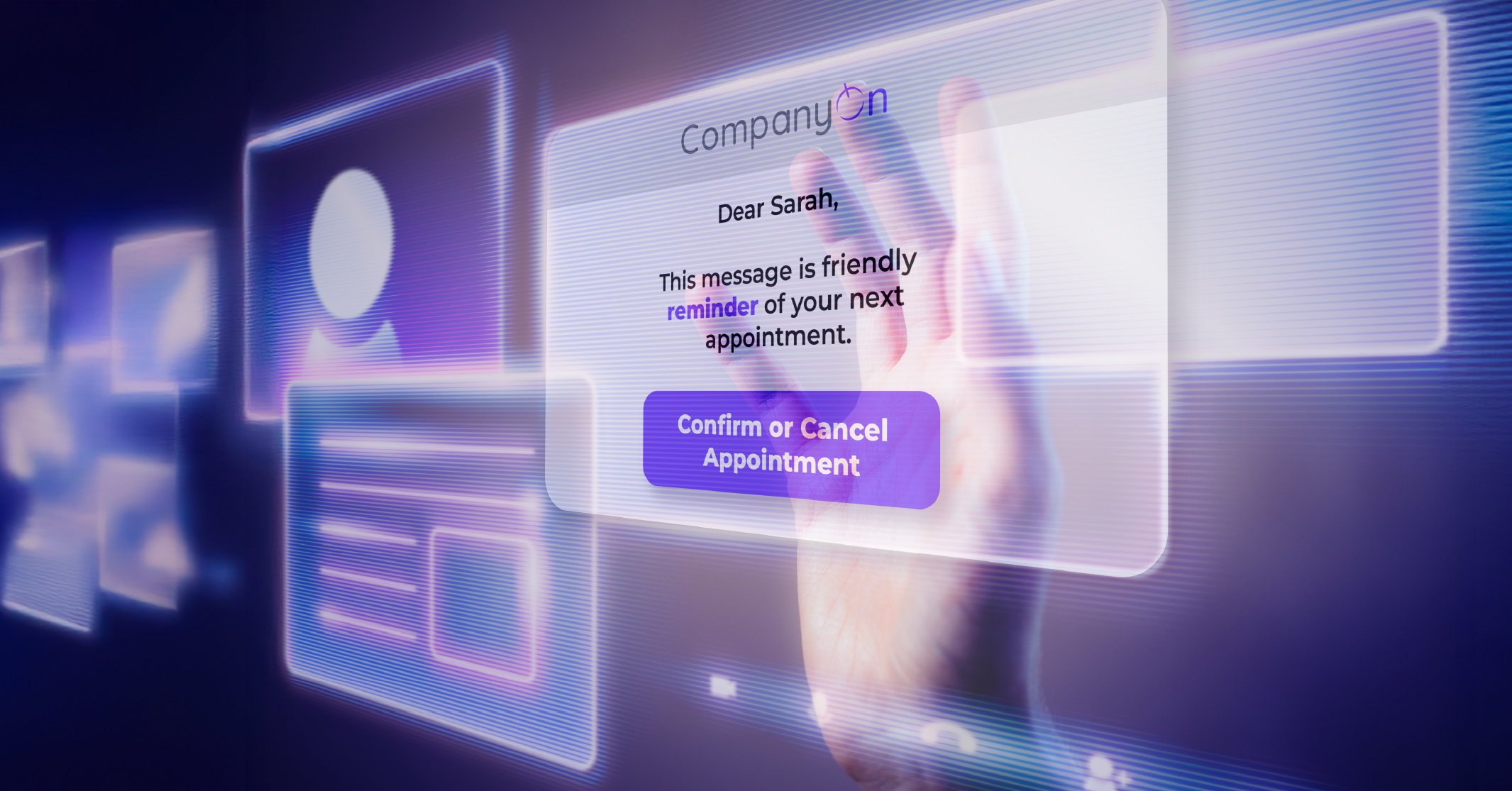
Automate Appointment Reminders Without Sounding Robotic: A More Human Digital Experience

In today’s fast-paced healthcare environment, appointment reminders are a must. They reduce no-shows, improve scheduling efficiency, and save valuable time for staff. But here’s the catch: if your reminders sound cold, generic, or overly automated, patients may ignore them—or worse, feel like just another number.

That’s where smart automation for small clinics makes a difference. With the right tools and approach, you can send timely, professional reminders that feel personal, caring, and aligned with your brand.

In this article, you’ll learn how to automate appointment reminders that work—without sacrificing the human connection that keeps patients coming back.

CompanyOn

Why Appointment Reminders Matter More Than Ever

  • No-shows cost you revenue and time. Even one missed appointment a day can represent thousands in annual losses.

  • Patients are busy. Life happens—reminders help patients stay on track.

  • Digital habits are growing. Most patients expect texts or emails, not phone calls.

But automation without empathy can lead to a sterile experience. To be effective, reminders need to be timely, friendly, and helpful.

How to Automate Reminders Without Losing the Human Touch

1. Personalize Every Message

Use your software to automatically include the patient’s name, appointment date/time, provider’s name, and location. A message that says:

Hi Sarah, just a friendly reminder of your visit with Dr. Chen on Tuesday at 10:30 AM. We look forward to seeing you at CompanyOn Clinic!

…is far more engaging than:

You have an appointment scheduled. Reply YES to confirm.

The first builds connection. The second feels like a spam text.

✅ CompanyOn lets you personalize automated reminders with dynamic fields that adjust based on the patient and appointment.

2. Choose the Right Channels

Not every patient prefers the same method of communication. Some like SMS. Others prefer email. A few may still want a call.

Use your intake form or patient profile to let people choose their preferred channel. This small touch shows respect for their communication style—and increases response rates.

💡 Learn how to improve engagement by offering options in How to Better Engage Your Clients by Leveraging Technology.

3. Time It Right

Don’t wait until the last minute. A strategic reminder schedule looks like this:

  • First reminder: 48 hours before the appointment (gives time to reschedule if needed).

  • Final reminder: 2–4 hours before (prevents same-day forgetfulness).

With automation, you can set this schedule once and trust that it will run without manual intervention.

4. Use Friendly, Human Language

Avoid cold or robotic language like “This is a system-generated notification.” Instead, keep it warm, simple, and professional:

  • “We’re excited to see you soon!”

  • “Got questions before your visit? Just reply to this message.”

Your brand voice should come through, even in automated messages.

5. Make It Easy to Confirm or Reschedule

A reminder is only useful if the patient can act on it. Include a one-click confirmation button or a link to reschedule their visit.

When patients can respond without having to call your clinic, they’re more likely to stay engaged.

🔁 Explore how online booking systems integrate with reminders to simplify this process.

6. Reinforce Trust and Privacy

Patients appreciate transparency. Let them know that reminders are secure and their information is protected. Include your clinic’s name in every message to avoid confusion and build trust.

Real Benefits of Smart Reminder Automation

Practices using humanized automation for reminders report:

  • Up to 60% reduction in no-show rates

  • Less admin time spent chasing appointments

  • Higher patient satisfaction, due to thoughtful digital experiences

Automation for small clinics isn’t just about saving time—it’s about creating better patient relationships at scale.


How CompanyOn Helps You Automate Without Sounding Automated

With CompanyOn, you can:

  • Send fully personalized reminders via SMS and email

  • Let patients confirm, cancel or reschedule in seconds

  • Automate follow-ups post-appointment

  • Customize language and timing to match your practice’s tone

Our platform is built for solo practitioners and small clinics that need simple, effective tools to run smoother — without losing the human side of care.

Learn more about our appointment management features.


Conclusion

Appointment reminders are one of the easiest and most impactful areas to automate in your clinic. But they don’t have to feel robotic. With the right approach, you can build a system that’s efficient and human.

By combining thoughtful messaging, patient preferences, and automation tools, you’ll not only reduce no-shows—you’ll reinforce trust, loyalty, and connection with every interaction.

Ready to modernize your reminder system without sacrificing the personal touch? Explore how CompanyOn helps small practices create a more human digital experience.

Ready to make the switch?

Try Our Platform Free for 14 days.

See CompanyOn in Action

Schedule A Free 1:1 Personalized Demo

Is Your Practice Truly Patient-Centered? Use This Checklist to Find Out

Every clinic claims to care about patients — but being truly patient-centered means something deeper. It means consistently delivering care that respects your patient’s time, preferences, goals, and experience at every step of their journey.

In today’s healthcare landscape, patients expect more than just clinical competence. They value personalization, transparency, and convenience. So, how do you know if your practice is aligned with those expectations?

This article walks you through a practical patient-centered care checklist to evaluate where you stand and where you can improve — so your practice not only retains patients, but stands out as a modern, trusted provider.

digital audit for clinics

1. Accessibility and Convenience

Ask yourself:

  • Do you offer online appointment booking that works on mobile?

  • Can patients complete forms digitally before arriving?

  • Do you provide telehealth options for those who can’t come in person?

  • Are your hours and communication channels flexible enough to meet patient needs?

Modern patients demand ease of access. Streamlining your scheduling and intake processes can significantly boost satisfaction. Learn more in Making Scheduling Instant and Easy

2. Clear and Compassionate Communication

Effective patient-centered care depends on communication. Consider:

  • Are patients informed ahead of their appointments about what to expect?

  • Do you use clear, jargon-free language in reminders and follow-ups?

  • Is your team trained to listen actively and respond empathetically?

  • Do you follow up after appointments with summaries or next steps?

If you’re unsure, explore how to better engage your clients by leveraging technology

3. Personalization of Care

Patients are not all the same — and they don’t want to be treated like they are. Reflect on:

  • Do you tailor your communication based on patient preferences (email, text, call)?

  • Are care plans created with patient input and goals in mind?

  • Do you acknowledge and accommodate individual concerns, values, or cultural contexts?

To understand how small, tailored interactions drive loyalty, read Digital Micro-Moments: The Secret to Patient Loyalty in 2026

4. Transparency and Patient Empowerment

Trust grows with transparency. Evaluate if:

  • Patients can access their records, notes, or treatment plans through a portal.

  • You explain billing, policies, and expectations clearly and upfront.

  • You actively encourage questions and make it easy for patients to reach out.

A well-designed patient management system can centralize this experience and empower patients throughout their journey.

5. Environment and Digital Experience

Patient-centered care also means creating an environment — both physical and digital — that feels safe, respectful, and professional. Ask:

  • Is your clinic clean, welcoming, and inclusive?

  • Are your emails, forms, and portals easy to use and mobile-friendly?

  • Do patients feel genuinely heard during visits or online interactions?

Learn how to enhance your digital experience in How to Create a Digital Experience That Engages Your Patients

6. Feedback and Continuous Improvement

A truly patient-centered practice listens and adapts. Reflect on:

  • Are you collecting patient feedback consistently (surveys, reviews, follow-ups)?

  • Do you take action based on that feedback and communicate changes to patients?

  • Do patients feel that their opinions actually matter?

Learn to turn input into growth in Turning Patient Feedback Into a Competitive Advantage for Your Practice

How Did You Score (Mentally)?

If you found several areas where your answer is “no” or “not sure,” that’s a sign there’s room to grow. That’s a good thing — because patient-centered care isn’t about being perfect. It’s about being intentional and continuously improving.

How CompanyOn Can Help You Deliver Patient-Centered Care

CompanyOn is designed for small clinics and solo practitioners who want to modernize their care without complexity. From online booking and automated intake to digital consent, reminders, and secure portals — we help you simplify your workflow and put patients first.

Discover how you can make your practice more people-focused today with CompanyOn’s platform

Conclusion

Patient-centered care is no longer a trend — it’s a standard. And patients are quick to notice when a clinic doesn’t deliver on it. By evaluating your systems and embracing this patient-centered care checklist, you position your practice for greater trust, retention, and long-term success.

Are you ready to become the clinic patients rave about?

Ready to make the switch?

Try Our Platform Free for 14 days.

See CompanyOn in Action

Schedule A Free 1:1 Personalized Demo